The Greek shipping community has intensified its pressure on European policymakers, warning that the European Union’s rigid regulatory posture threatens to derail the final stages of international negotiations on a global net-zero framework for maritime transport. As delegates prepare to convene in London for a pivotal series of meetings, the Union of Greek Shipowners (UGS) has publicly criticised Brussels for placing its own regulatory interests above the prospect of a comprehensive global agreement.
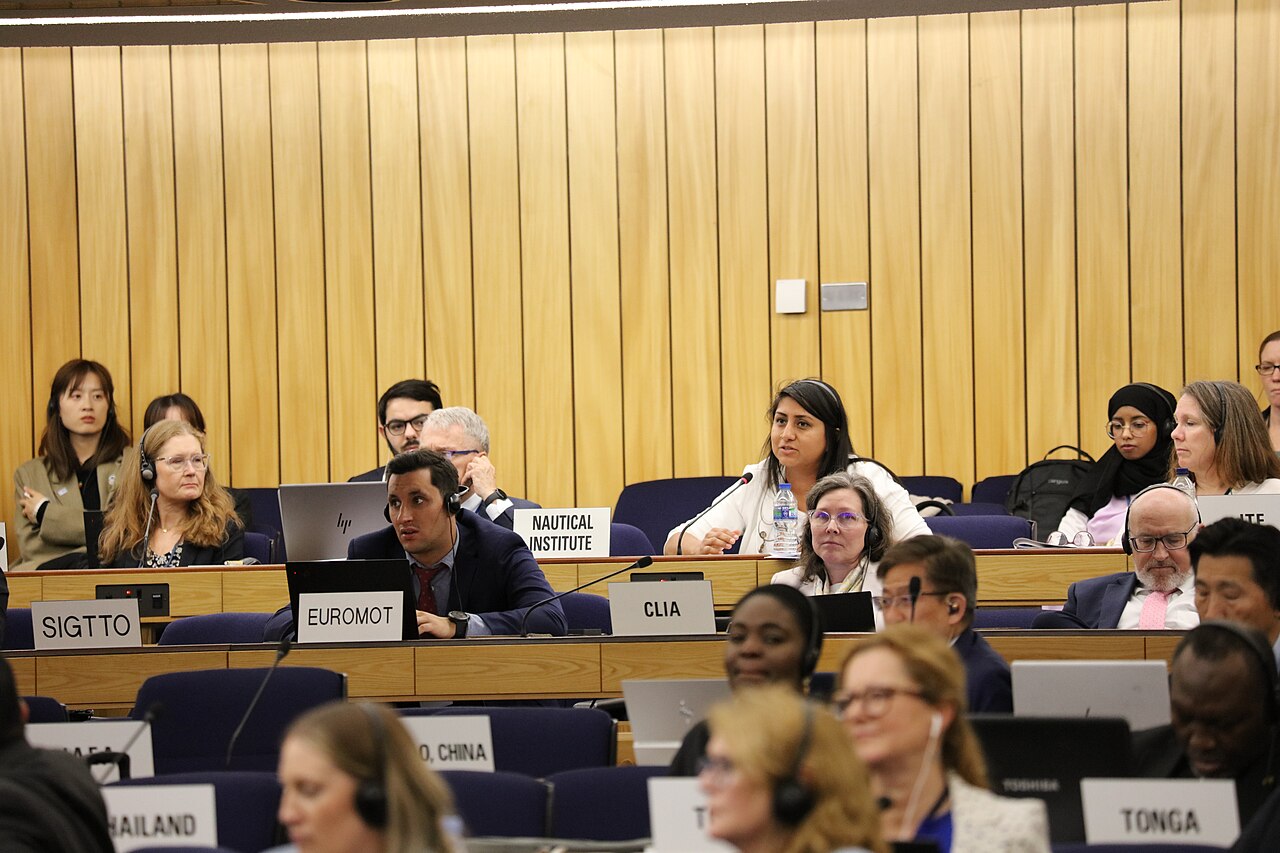
Melina Travlos, president of the UGS, stated on Monday that the EU’s unwillingness to compromise risks pushing the International Maritime Organization (IMO) into another deadlock. The comments come at a delicate juncture, just days before the IMO Working Group on Reduction of GHG Emissions from Ships (ISWG-GHG) is scheduled to meet from November 23 to November 27. This will be followed immediately by the 85th session of the Marine Environment Protection Committee (MEPC), which runs from November 30 to December 3. A further extraordinary session has been provisionally scheduled for December 4, subject to confirmation.
Accusations of regulatory protectionism
Travlos argued that there has been no meaningful progress since the previous negotiating round held in September. She questioned whether the European Commission is more interested in preserving its existing regional carbon regulations and the revenue streams they generate than in securing a worldwide deal that would level the playing field for all operators. The UGS president highlighted that Greece, alongside three other EU member states, collectively controls approximately 70% of Europe’s shipping fleet. Despite this significant weight, she noted that appeals from these nations for greater flexibility in the European negotiating position have gone unanswered by Brussels.
According to Splash 247, the intervention is designed to force a public debate on the compatibility of EU regional measures with the emerging global framework. The UGS contends that the EU’s current approach creates a fragmented regulatory landscape that disadvantages Greek owners who operate on global trade routes, where competitors may not face identical regional costs. By framing the issue as one of fairness and global efficacy, the UGS seeks to isolate Brussels within the broader IMO coalition, particularly among flag states and industry bodies that favour a uniform global standard over regional add-ons.
Stalemate on Net-Zero Framework design
The core of the dispute revolves around the IMO’s proposed Net-Zero Framework, which combines a global marine fuel standard with an emissions-pricing mechanism. Negotiations have been held up by deep-seated disagreements over the design, cost, and implementation of these measures. While the EU advocates for a strict trajectory towards decarbonisation, other stakeholders argue that the proposed mechanisms are financially punitive and technically unfeasible given the current state of alternative fuel availability.
Travlos called for a framework that accurately reflects the availability and cost of alternative fuels, the readiness of supporting infrastructure, and competition for new fuels from other industries. She argued that the current proposals fail to account for these practical realities, potentially imposing costs that cannot be offset by operational efficiencies alone. The UGS position is that without realistic adjustments, the framework could undermine the economic viability of shipping rather than accelerating the green transition.
TradeWinds reported that the Greek shipowners’ criticism centres on what they describe as a striking inconsistency in the EU’s approach to emissions rules. The outlet’s headline underscores the perception that Brussels is pursuing a dual strategy: championing global standards at the IMO while simultaneously enforcing strict regional regulations that may conflict with or duplicate those global efforts. This perceived inconsistency is a key point of contention for the UGS, which argues that it creates uncertainty for investors and operators planning long-term fleet renewal strategies.
Operational and financial implications
The deadlock is not merely a diplomatic inconvenience; it has direct consequences for capital allocation and operational planning. Shipowners face a dilemma: invest in newbuilds or retrofits based on anticipated global rules that may change, or adhere to regional EU mandates that could become redundant or conflicting if a global deal is eventually reached. The UGS emphasises that energy-efficiency improvements and operational measures are being overlooked in favour of expensive technological shifts that the market is not yet ready to support at scale.
Furthermore, the revenue generated from regional carbon taxes is a point of friction. Travlos suggested that Brussels may be reluctant to cede control of these funds or mechanisms to a global body, fearing a loss of political leverage and fiscal resources. This suspicion, whether substantiated by internal EU deliberations or not, has hardened the Greek stance. The UGS insists that a global framework must be financially neutral for operators in the short term, allowing the industry to recover from post-pandemic volatility before absorbing the costs of decarbonisation.
What this means for operators
For ship operators, the immediate consequence of this public rift is heightened regulatory uncertainty. With the IMO meetings in London approaching, operators should prepare for the possibility that no definitive global framework will be adopted by the end of the year. The provisional December 4 session indicates that negotiations are likely to extend beyond the scheduled dates, leaving the industry in limbo regarding compliance costs and technology selection.
Operators must carefully assess their exposure to both EU regional regulations and potential future IMO mandates. The UGS’s call for flexibility suggests that any final agreement may include transitional periods or exemptions that could vary by flag state or trade route. Companies should therefore avoid locking into long-term fuel contracts or vessel designs that assume a rigid, uniform global standard without considering regional variances. The pressure from major European fleets like Greece’s indicates that the final text of the Net-Zero Framework may involve significant compromises on pricing mechanisms and fuel mandates, potentially delaying the financial impact but extending the period of strategic uncertainty for the next 12 to 18 months.
Ten artykuł powstał z pomocą systemu AI i został sprawdzony przez redakcję przed publikacją. Źródła podano poniżej.
Tematy: Decarbonisation, EEXI and CII
Więcej z Regulation & Class
Więcej doniesień
- Romania Blames Russia Over Fatal Drone Attack on Cargo Ship · Casualties & Safety
- Precious Shipping Orders Four Ultramax Bulk Carriers for $141.8m · Newbuilds & Orders
- HD Hyundai and Kiewit to Build New US Shipyard Targeting 2029 Operations · Shipyards & Repair
- Managing Bunker Delivery Note Disputes: A Guide for Ship Operators · Knowledge
- QatarEnergy Secures U.S. LNG Supply Through 2054 · Offshore & Energy
- Draught Survey Procedure – Essential Guidance for Ship Operators · Knowledge
